







Bone marrow transplantation is the replacement of a patient’s damaged or destroyed bone marrow with new bone marrow cells. Bone marrow transplantation can be a lifesaving method in acute leukemias and lymphomas, which are resistant to standard chemotherapy.
Since 2014 more than 2800 Bone Marrow Transplantation
Highly Specialized
- Haploidentical transplantation with αβ+ T cell depletion
- Modern cutting-edge methods such as;
- CD45RA depletion
- CD19+ cell depletion
- Mesenchymal stem cell
- Virus specific t cell support
Types of BMT
- Autologous transplantation
- Fully matched allogeneic transplantation
- Matched unrelated donor transplantation
- Haploidentical transplantation
| Transplant Type | < 100 SR | > 100 SR |
| Autologous | 98 % | 94 % |
| Allogeneic – Related | 79 % | 79 % |
| Allogenic – Unrelated | 100 % | 80 % |
| Haploidentical | 83 % | 62 % |
CAR T-Cell Therapy at Acıbadem Türkiye
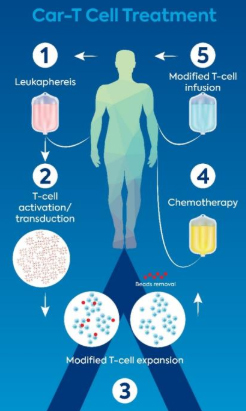
Chimeric antigen receptors (CARs) are receptor proteins that have been engineered to give T cells the new ability to target a specific antigen. CAR T cell therapy uses T cells engineered with CARs to treat cancer. T cells are modified to recognize cancer cells and destroy them.
The standard approach is to harvest T cells from patients, genetically alter them, then infuse the resulting CAR T cells into patients to attack their tumors
Pediatric Bone Marrow Transplantation
- Autologous Transplant
- Matched-Related Donor Transplant (MRD, Allojeneic)
- Haploidentical Transplant (Allogeneic, partial matched)
- Matched-Unrelated Donor Transplant (MUDAllogeneic)
- Umbilical Cord Blood Transplantation


